Beach village · 0 km
Arambol
A long crescent of sand under red laterite, a spring-fed lake behind the northern headland, and a beach path that turns into a small seasonal village every winter.
Arambol · Mandrem · Korgaon
Three villages share one stretch of North Goan coastline — a beach famous for its sunsets, a river mouth that stayed quiet, and a lane of paddy fields behind them both. This is the country Rewoga lives in.
The Coast
Arambol is where most people arrive. Mandrem is where they go to sleep. Korgaon is where the rice and the cashew grow. Between the three you have the whole grammar of this corner of Goa: the sea, the river mouth, and the fields behind.
Beach village · 0 km
A long crescent of sand under red laterite, a spring-fed lake behind the northern headland, and a beach path that turns into a small seasonal village every winter.
Quiet sands · ≈3 km south
Wider, paler, emptier. Screwpine groves hold the dunes, a shallow river mouth closes the beach to the north, and the cafes close when they feel like it.
Inland village · ≈5 km east
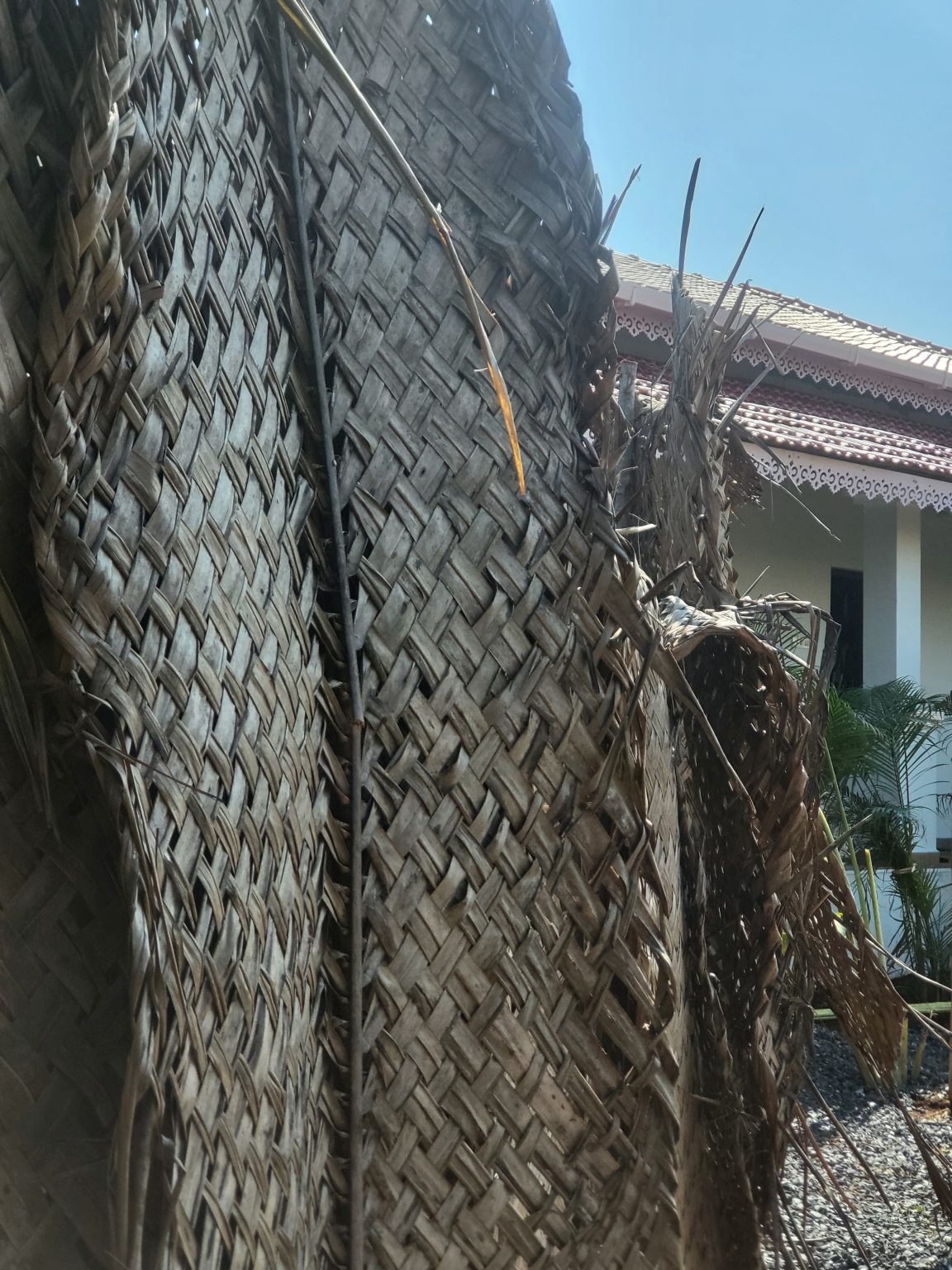
Paddy fields, cashew and coconut groves, lanes of red laterite that turn to clay in the monsoon — and the sweet, sharp smell of feni distilling in the shade.
Tiracol Arambol Mandrem Ashwem Morjim Chapora
Arambol Beach
Arambol's beach runs in a single long curve, the Arabian Sea on one side and a wall of coconut palms, laterite and low guesthouses on the other. At the northern end the sand narrows into Kalacha cove, where the cliffs come down to the water and the beach path gives up and becomes a footpath.
Mornings belong to the village: boats hauled up on the sand, nets spread out to dry, dogs patrolling the tideline, a few swimmers who know how good the water is before eight. By late afternoon the whole beach has turned to face west, and the shacks start stacking cushions.

Sweet Water Lake & Parvati Hill
Walk north along the beach, climb the headland past Kalacha, and within fifteen minutes you are standing at a spring-fed freshwater lake — green, still, and close enough to the surf that the two sounds overlap at night. People swim here at dawn, before the path gets busy.
Above it the path keeps climbing to Parvati hill, the ridge that separates Arambol from Paliem. Sunset from up there is the village's other religion: the whole coast laid out in one line, the sea turning copper, and — in season — tandem paragliders stepping off the top and drifting out over the water.
Village Life
Arambol is not a resort that grew a village. It is a village that learned to tolerate visitors — and the older rhythms are still the ones that set the day.
At the southern end of the beach, the fishing families still launch and haul their boats by hand. Nets are mended in the shade of the palms, fish is dried on mats beside the path, and whatever does not go to the shacks goes to the market in Pernem. Tourism arrived in the 1970s and never left; the boats did not notice.
Behind the beach path the village is a knot of laterite lanes, whitewashed chapels and the Bhagwati temple, whose annual jatra — drums, processions, sweets — usually fills the lanes in spring. Pernem was the last corner of Goa to pass to the Portuguese, and these villages still feel more Konkan than colonial: Konkani and Marathi in the lanes, temples as much as chapels, red earth instead of plaster.
Inland, the fields are still worked. Rice in the monsoon, cashew in the dry months, coconut all year. Cashew feni — Goa's own spirit — is still distilled in small stills across this taluka, and in March and April you can smell it from the road.
“The sea is the loudest thing here, and it is also the thing that keeps everyone on the same schedule.”
Arambol, at six in the morningCulture
Arambol's culture is not staged. It is what a few thousand people who came for a week and stayed for a season ended up doing with their evenings — and it is still happening, most nights, for free.
As the light goes, a circle forms on the sand: djembes, a flute, someone's harmonium. Join in, or sit at the edge with a coconut. Both are correct.
Poi, staff and fire spinning after dark, taught in the moment and passed along the beach from one season to the next.
Beach shacks and a handful of venues host acoustic sets, world music and psy-trance. Amplified sound generally winds down around 10 pm — the village has to sleep.
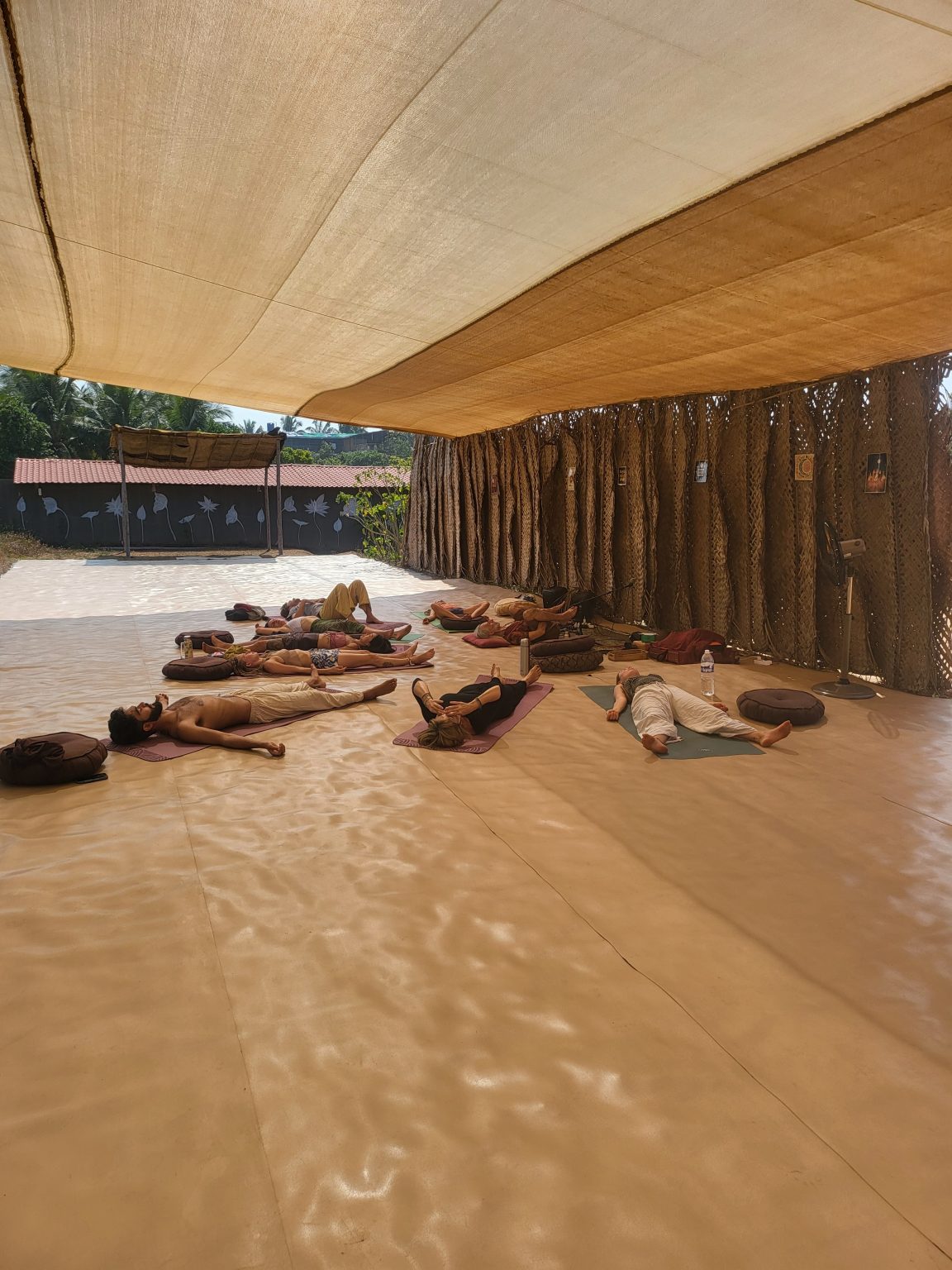
Drop-in yoga, sound healing, breathwork and ecstatic dance — the scene Rewoga grew out of still runs every season, in shalas tucked behind the palms.
Tailors, jewellers, leather workers and textile stalls line the beach path. The seasonal market is where half the village shops and the other half sells.
Fish thali and Goan curry at the village end; smoothie bowls and espresso at the beach end. After fifty years, both are authentically Arambol.
Mandrem
Three kilometres south, past the headland, the beach changes character entirely. Same sea, same sunsets — a completely different volume.
Mandrem is wider and paler than Arambol, backed by screwpine groves whose roots hold the dunes together, and closed to the north by a small river mouth you can wade across at low tide. There are no beach shacks pumping music; there are a few good cafes, a handful of yoga shalas, and guesthouses hidden behind the palms.
This is where people go when they have decided to stay a while. Mornings are for practice and coffee, afternoons for the river mouth where children paddle in water that stays knee-deep for fifty metres, evenings for the long walk north to watch Arambol light up.
To the south, Ashwem and Morjim continue the same stretch of sand. Morjim is a protected Olive Ridley turtle nesting beach, so in nesting season the rules are simple: no lights, no dogs, no driving on the sand after dark.
Korgaon
Turn east off the coast road and within five minutes the sea is gone. Korgaon is a working village of paddy, cashew and coconut — and the fields Rewoga looks across from the shala.
There is not much to “do” in Korgaon, which is precisely the point. Walk the field bunds at sunrise, watch the paddy change colour from emerald to gold between June and November, buy coconut water from a roadside stall, and find the small temple and chapel that anchor the village.
The lanes are red laterite, which is beautiful in December and treacherous in July. Houses sit behind coconut palms and cashew trees, with courtyards swept clean each morning and fish drying on a mat when the boats have been lucky.
It is also where a good part of the Rewoga team comes from. The people who cook your dinner, tend the garden and drive you to the airport grew up in these lanes — which is one of the reasons the retreat feels like a village rather than a hotel.
“Five minutes inland and the sea is only a sound you remember.”
On the Korgaon roadA Day Here
Nothing here needs booking. This is simply the shape the day tends to take, whether you are on a Rewoga retreat or just passing through.
Walk the beach at the village end before the sand is marked. The catch is landed, the nets are spread, and the light comes up behind the palms rather than over the sea.
Yoga, breathwork or a slow movement session while the air is still cool. On retreat this is the shala; on your own, it is any shala in Arambol or Mandrem that takes drop-ins.
North over the headland to the sweet water lake for a swim, then up to Parvati hill for the view before the heat settles. Back on the sand by noon.
The middle of the day belongs to shade, coconut water and a book. Or take a scooter inland to Korgaon and watch the paddy move in the wind.
Parvati hill for the wide view, or the sand in front of the shacks for the drum circle. This is the hour the whole village agrees on.
A fish thali at the village end, or a slow plant-based dinner at Gaia. Either way, you will be asleep long before the last shack closes — and awake before it opens.
Seasons
The coast has three moods, and they are genuinely different holidays. Rewoga runs its retreats through the dry season, when the sea is swimmable and the evenings are cool.
Outside the monsoon the sea is generally calm, but there are no lifeguards on this stretch and the currents at the headlands can be strong. Swim at mid tide, near other people, and never at night. During the monsoon, stay out of the water entirely.
Practical
Arambol is the end of the coast road, which is why it feels like the end of the world and also why the last hour needs a little planning.
Arambol is a village first and a destination second, and it stays generous when visitors remember that. Cover shoulders and knees at the temple, ask before photographing people, keep music low after ten, refuse single-use plastic, and stay off the turtle beaches at night in nesting season.
None of this is a rule imposed on you. It is simply how the coast has managed to stay itself for fifty years.
Stay here
Our shala sits among the palms between Arambol and the fields behind it — close enough to walk to the sunset, far enough to sleep through the night.